Finnish for Taxi Drivers: The Exam, the Customers, and the Language In Between
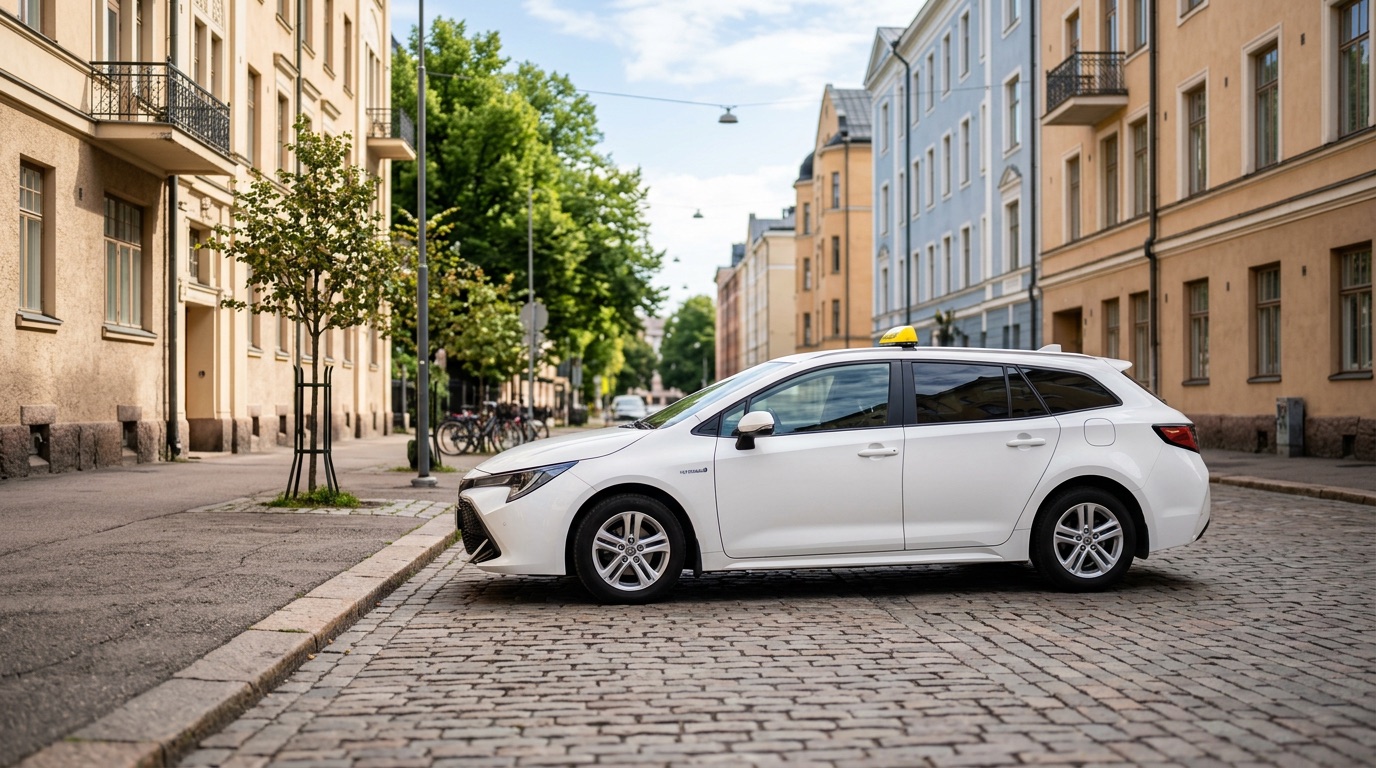
Taxi driving is one of the most common first professions for immigrants in Finland, flexible hours, real demand, and a path to steady income. But between you and the wheel sits a licensing exam, and between you and good earnings sits something the exam doesn't fully test: the ability to talk with the person in your back seat.
This guide covers both, the Finnish you need to qualify, and the Finnish that makes the job actually work.
The taxi driver exam (taksinkuljettajan koe)
To drive a taxi in Finland you need a taxi driver's licence (taksinkuljettajan ajolupa), which requires passing Traficom's taxi driver exam. The exam covers passenger safety, assisting passengers with special needs, customer service situations, and transport regulations, and it's taken in Finnish or Swedish.
This is the part that catches people out. The driving is the easy bit; the exam is a reading comprehension test in disguise. Questions are written in formal Finnish with precise wording, and you need enough reading skill to parse what's actually being asked. A solid A2–B1 reading level makes the difference between guessing and knowing. Check traficom.fi for the current exam format and requirements.
The Finnish a shift actually requires
Once you're licensed, your working language is spoken Finnish, and it comes in a predictable set of situations. That predictability is good news: taxi Finnish is one of the most learnable professional vocabularies, because 90% of rides follow the same script.
Pickup and destination
- Hyvää päivää! Minne mennään?, Good day! Where are we headed?
- Onko teillä matkatavaroita?, Do you have luggage?
- Laitan laukut takakonttiin., I'll put the bags in the boot.
- Mennäänkö moottoritietä vai keskustan kautta?, Shall we take the motorway or go through the centre?
During the ride
- Sopiiko tämä lämpötila?, Is this temperature okay?
- Saako olla radiota?, Would you like the radio on?
- Perillä ollaan noin varttitunnissa., We'll be there in about fifteen minutes.
- Tässä on vähän ruuhkaa, mutta se helpottaa pian., There's a bit of traffic here, but it'll clear soon.
Payment and goodbye
- Se tekee kaksikymmentäkolme euroa., That's twenty-three euros.
- Käykö kortti?, Is card okay? (You'll also hear customers ask you this.)
- Haluatteko kuitin?, Would you like a receipt?
- Kiitos kyydistä, hyvää päivänjatkoa!, Thanks for riding, have a good day!
Numbers deserve special mention: you'll say prices out loud dozens of times a day, and Finnish numbers are long words. Drill them until they're automatic, our Finnish numbers guide covers the whole system including prices and times.
The small talk that earns ratings (and tips)
Here's the thing about Finnish passengers: many prefer silence, and that's fine, silence isn't rude in Finland. But when a customer does open a conversation, being able to hold up your end changes how the whole ride feels. The reliable topics:
- Weather, Onpa tänään kylmä ilma. (Cold weather today.) The eternal Finnish opener.
- Where they're going, Oletteko menossa töihin vai vapaalle? (Heading to work or off duty?)
- Ice hockey, in season, knowing whether HIFK or Kärpät won last night is worth more than any grammar rule.
- Weekend, Mitäs viikonlopulle on suunnitteilla? (Any plans for the weekend?)
Crucially, passengers speak puhekieli, colloquial Finnish. A customer won't say minä menen lentoasemalle; they'll say mä meen lentokentälle. If you've only studied textbook Finnish, your first weeks will feel like the customers are speaking a different language. They are, the spoken one.
Difficult situations
Every driver eventually needs these:
- Valitettavasti en voi ottaa enempää matkustajia., Unfortunately I can't take more passengers.
- Turvavyö pitää laittaa kiinni., The seatbelt must be fastened.
- Maksu tapahtuu etukäteen tällä reitillä., Payment is in advance on this route.
- Voinko auttaa teidät autoon?, May I help you into the car? (essential for assisting elderly passengers)
- Soitan teille toisen taksin., I'll call you another taxi.
Learning Finnish when you work behind the wheel
Taxi drivers have a hidden advantage: hours of alone time in the car. That's prime language-learning time if you use it, and dead time if you don't.
- Hands-free audio practice between rides. Listen-and-repeat practice works perfectly in a parked taxi at a stand.
- Learn from every customer. Each ride is a free listening lesson. Note (mentally) one new word per shift.
- Drill the ride script until it's automatic. The pickup–ride–payment loop above is maybe 40 phrases. Owning them completely frees your attention for the unpredictable parts.
This is exactly why SuomiSpeak's Finnish for Work update includes a dedicated Taxi Driver course, 50 lessons of ride-situation vocabulary and dialogues, plus hands-free voice practice designed for people who work with their hands on a wheel, and practice exams that train the formal reading comprehension the Traficom test demands.
Frequently asked questions
Do I need Finnish to drive a taxi in Finland?
Yes. The Traficom taxi driver exam is taken in Finnish or Swedish, and daily customer work runs on spoken Finnish. A solid A2–B1 reading level for the exam and functional spoken Finnish for customers is the realistic target.
How hard is the Finnish taxi driver exam language-wise?
The questions are written in precise, formal Finnish, it's effectively a reading comprehension test on top of the subject matter. Most failures come from misreading questions, not from not knowing the material.
What Finnish do taxi customers actually speak?
Colloquial spoken Finnish (puhekieli), 'mä meen' instead of 'minä menen', 'kolkyt' instead of 'kolmekymmentä'. If you've only studied textbook Finnish, train your ear on real spoken dialogues before your first shift.
Finnish for the driver's seat
A 50-lesson Taxi Driver course, hands-free voice practice for the road, real spoken-Finnish dialogues, and timed practice exams. Free to start.