Finnish Numbers 1–1000: How to Count in Finnish
Finnish numbers are pleasingly logical. Once you know the base numbers from 1–10 and a handful of rules, you can construct any number you need. There are no irregular forms like "eleven" and "twelve" in English, Finnish teens follow a strict pattern, and compound numbers stack predictably. This guide walks you through everything.

Finnish numbers 1–10
These are the building blocks for everything else. Memorise these first.
| Number | Finnish | Pronunciation |
|---|---|---|
| 0 | nolla | nol-la |
| 1 | yksi | uuk-si |
| 2 | kaksi | kak-si |
| 3 | kolme | kol-me |
| 4 | neljä | nel-yä |
| 5 | viisi | vee-si |
| 6 | kuusi | koo-si |
| 7 | seitsemän | seyt-se-män |
| 8 | kahdeksan | kah-dek-san |
| 9 | yhdeksän | uh-dek-sän |
| 10 | kymmenen | kuum-me-nen |
Note the pronunciation of yksi (1): the y in Finnish sounds like the German "ü", a rounded front vowel, not the English "y". And neljä: the j in Finnish is always pronounced like English "y".
Finnish numbers 11–19
Finnish teens use the suffix -toista, which literally means "of the second (ten)". This is one of those logical Finnish patterns that makes sense once explained.
| Number | Finnish | Literal meaning |
|---|---|---|
| 11 | yksitoista | one-of-the-second |
| 12 | kaksitoista | two-of-the-second |
| 13 | kolmetoista | three-of-the-second |
| 14 | neljätoista | four-of-the-second |
| 15 | viisitoista | five-of-the-second |
| 16 | kuusitoista | six-of-the-second |
| 17 | seitsemäntoista | seven-of-the-second |
| 18 | kahdeksantoista | eight-of-the-second |
| 19 | yhdeksäntoista | nine-of-the-second |
Tens: 20–90
Tens in Finnish combine the base number with kymmentä (tens):
| Number | Finnish |
|---|---|
| 20 | kaksikymmentä |
| 30 | kolmekymmentä |
| 40 | neljäkymmentä |
| 50 | viisikymmentä |
| 60 | kuusikymmentä |
| 70 | seitsemänkymmentä |
| 80 | kahdeksankymmentä |
| 90 | yhdeksänkymmentä |
Compound numbers 21–99
Compound numbers in Finnish are written and spoken as one word, the tens and units join directly with no extra connective word:
- 21 = kaksikymmentäyksi (twenty-one)
- 35 = kolmekymmentäviisi (thirty-five)
- 47 = neljäkymmentäseitsemän (forty-seven)
- 99 = yhdeksänkymmentäyhdeksän (ninety-nine)
The pattern: [tens] + [units], all one word. No "and" like in English "twenty-one".
Hundreds
| Number | Finnish |
|---|---|
| 100 | sata |
| 200 | kaksisataa |
| 300 | kolmesataa |
| 400 | neljäsataa |
| 500 | viisisataa |
| 600 | kuusisataa |
| 700 | seitsemänsataa |
| 800 | kahdeksansataa |
| 900 | yhdeksänsataa |
Compound hundreds follow the same joining logic:
- 150 = satakymmentäviisi
- 247 = kaksisataaneljäkymmentäseitsemän
- 999 = yhdeksänsataayhdeksänkymmentäyhdeksän
Thousands and beyond
| Number | Finnish |
|---|---|
| 1,000 | tuhat |
| 2,000 | kaksituhatta |
| 10,000 | kymmenentuhatta |
| 100,000 | satatuhatta |
| 1,000,000 | miljoona |
Ordinal numbers
Ordinals (first, second, third…) follow their own pattern in Finnish:
| Number | Finnish ordinal |
|---|---|
| 1st | ensimmäinen |
| 2nd | toinen |
| 3rd | kolmas |
| 4th | neljäs |
| 5th | viides |
| 6th | kuudes |
| 7th | seitsemäs |
| 8th | kahdeksas |
| 9th | yhdeksäs |
| 10th | kymmenes |
Note that ensimmäinen (first) and toinen (second) are irregular, as in most languages. From third onwards the pattern becomes regular: add -s and sometimes adjust the stem.
Numbers in everyday use
Telling the time
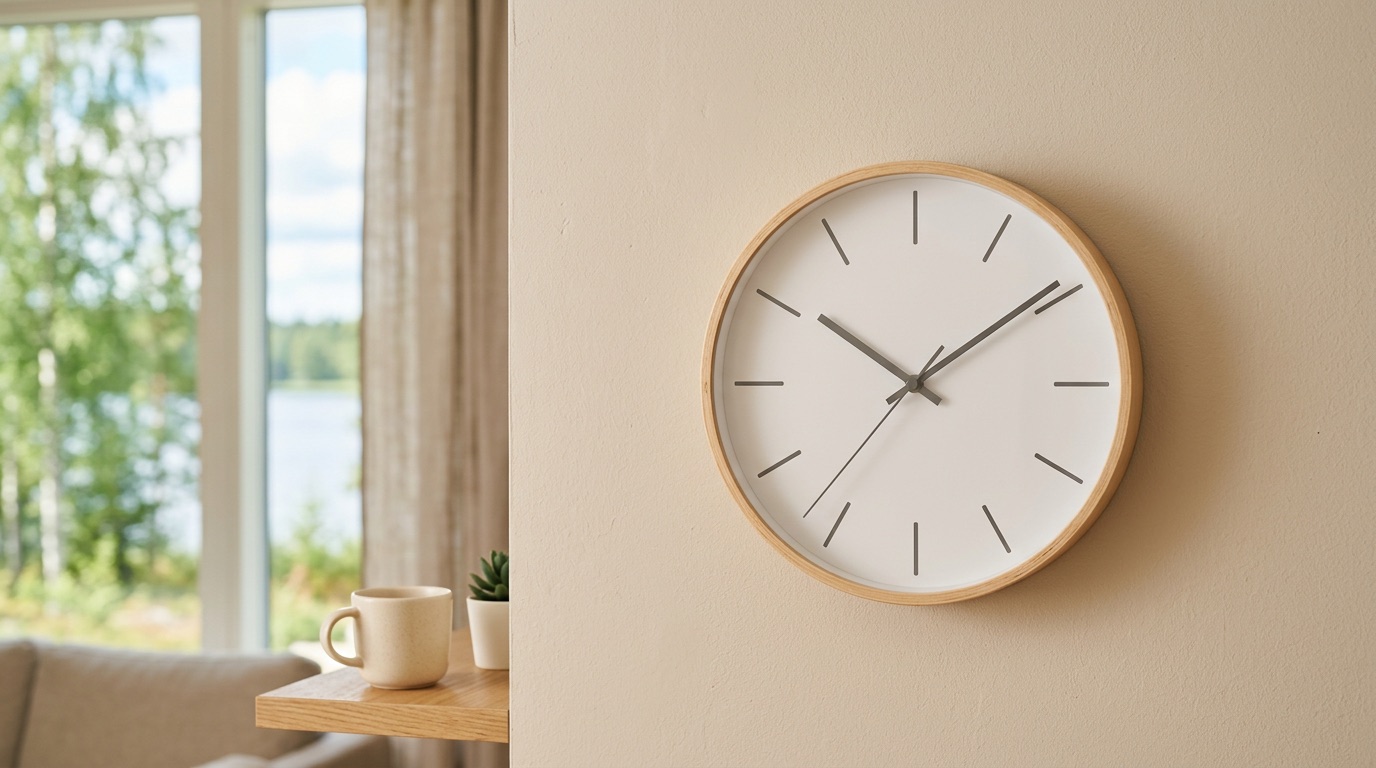
Finnish time uses a slightly different system from English:
- Kello on kolme, It is three o'clock (lit. "the clock is three")
- Kello on puoli neljä, It is half past three (lit. "half four", meaning halfway to four)
- Kello on neljännes vaille viisi, It is quarter to five
- Kello on viisi yli neljä, It is five past four
Important: Finnish "puoli neljä" (half four) means 3:30, halfway TO four, not half past four as in some other languages. This trips up many learners.
Prices
- Kolme euroa viisikymmentä senttiä, Three euros fifty cents (€3.50)
- Paljonko tämä maksaa?, How much does this cost?
- Se maksaa kaksikymmentäviisi euroa, It costs twenty-five euros
Dates
- Tänään on kahdeksastoista toukokuuta, Today is the 18th of May
- Date format: day (ordinal) + month (in partitive case) + year
- Syntymäpäiväni on kolmastoista helmikuuta, My birthday is the 13th of February
Phone numbers
Finns typically read phone numbers as individual digits: 0-4-4-1-2-3-4-5-6-7 = "nolla neljä neljä yksi kaksi kolme neljä viisi kuusi seitsemän". Sometimes grouped in pairs.
Practice Finnish numbers with SuomiSpeak
SuomiSpeak drills Finnish numbers in real contexts, prices, quantities, dates, and listening exercises. Learn them until they come automatically. Free to start.
Frequently asked questions
How do you say numbers in Finnish?
1–10: yksi, kaksi, kolme, neljä, viisi, kuusi, seitsemän, kahdeksan, yhdeksän, kymmenen. Teens add -toista (yksitoista = 11). Tens use -kymmentä (kaksikymmentä = 20). Compounds join directly: 21 = kaksikymmentäyksi.
What is 100 in Finnish?
Sata. Multiples: kaksisataa (200), kolmesataa (300), etc. 1000 is tuhat.
How do ordinal numbers work in Finnish?
First = ensimmäinen, second = toinen (both irregular). Third onwards: kolmas, neljäs, viides, kuudes, seitsemäs, kahdeksas, yhdeksäs, kymmenes.
Is "puoli neljä" 3:30 or 4:30?
It's 3:30. "Puoli neljä" means "half (of the way) to four", halfway TO four o'clock. This is a common mistake for learners from countries where "half four" implies half past.