Finnish for Nurses: The Language Requirements, and How to Actually Meet Them
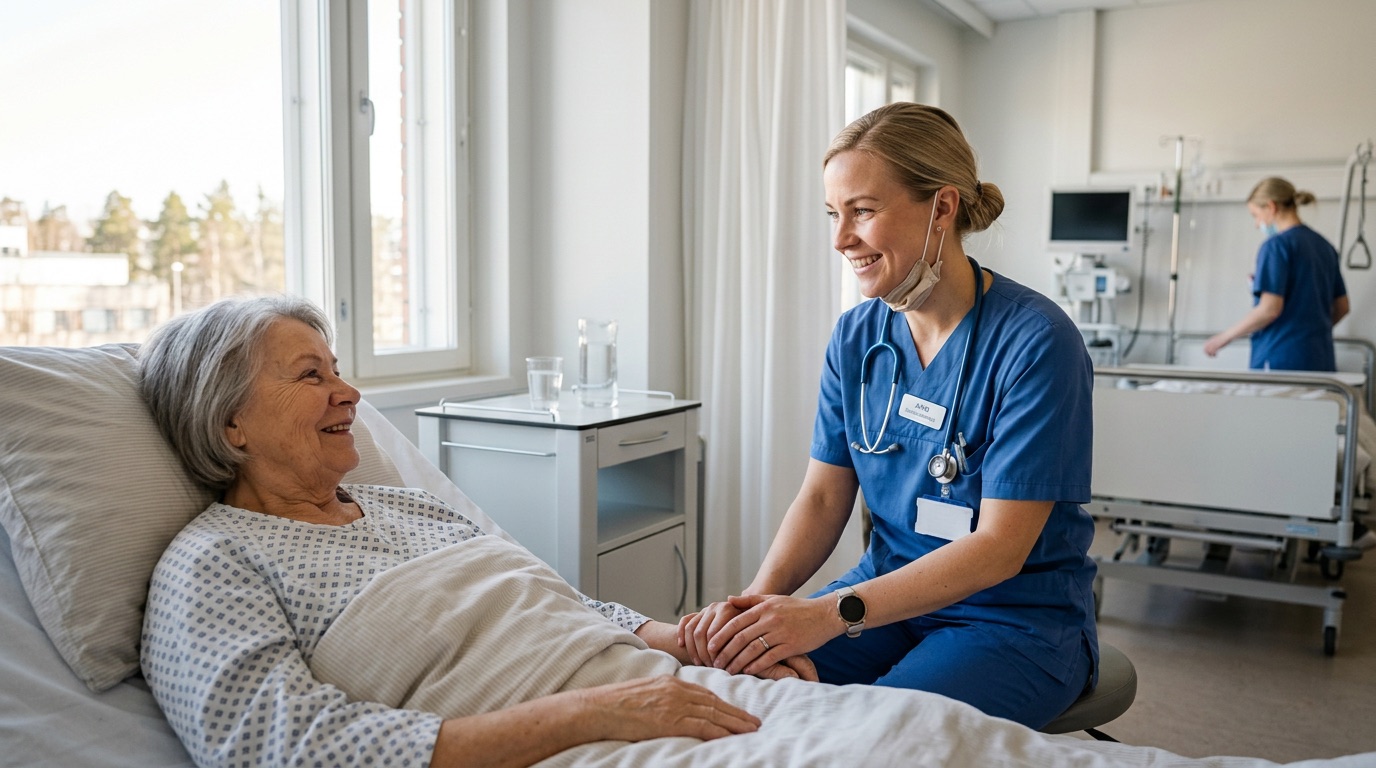
Finland needs nurses. The country's population is ageing faster than almost anywhere in Europe, hospitals and care homes are recruiting internationally, and thousands of qualified nurses from the Philippines, India, Kenya, and elsewhere arrive every year. Then they hit the wall that nobody warned them about properly: the language.
Nursing is one of the few professions where Finnish isn't just useful, it's a licensing requirement. This guide covers what level you actually need, what hospital Finnish really sounds like (spoiler: not like your textbook), and a realistic plan for getting there.
What Finnish level does Valvira (now Lupa- ja valvontavirasto) require?
The Finnish Supervisory Agency (Lupa- ja valvontavirasto, formerly Valvira) grants the right to practise as a licensed nurse (sairaanhoitaja) in Finland. If you trained outside the EU/EEA, demonstrating Finnish (or Swedish) skills is part of the licensing process. In practice, the commonly accepted benchmark is YKI level 3, which corresponds to CEFR B1, across the test's sections.
But here's what experienced foreign nurses will tell you: B1 gets you the licence, not the job comfort. Employers, especially hospitals, often prefer stronger skills, and your daily work will constantly push against the edges of B1. Patient safety depends on you understanding an elderly patient mumbling in dialect, or catching the difference between verenpaine (blood pressure) and verensokeri (blood sugar) in a fast shift handover.
Realistic targets:
- B1 (YKI 3), the licensing benchmark; enough to work under supervision and grow
- B2, where daily work stops being exhausting; needed for many permanent hospital positions
- C1, leadership roles, specialised units, teaching
Always check the current requirements directly with the Finnish Supervisory Agency (lvv.fi, formerly Valvira), since pathways differ depending on where you trained.
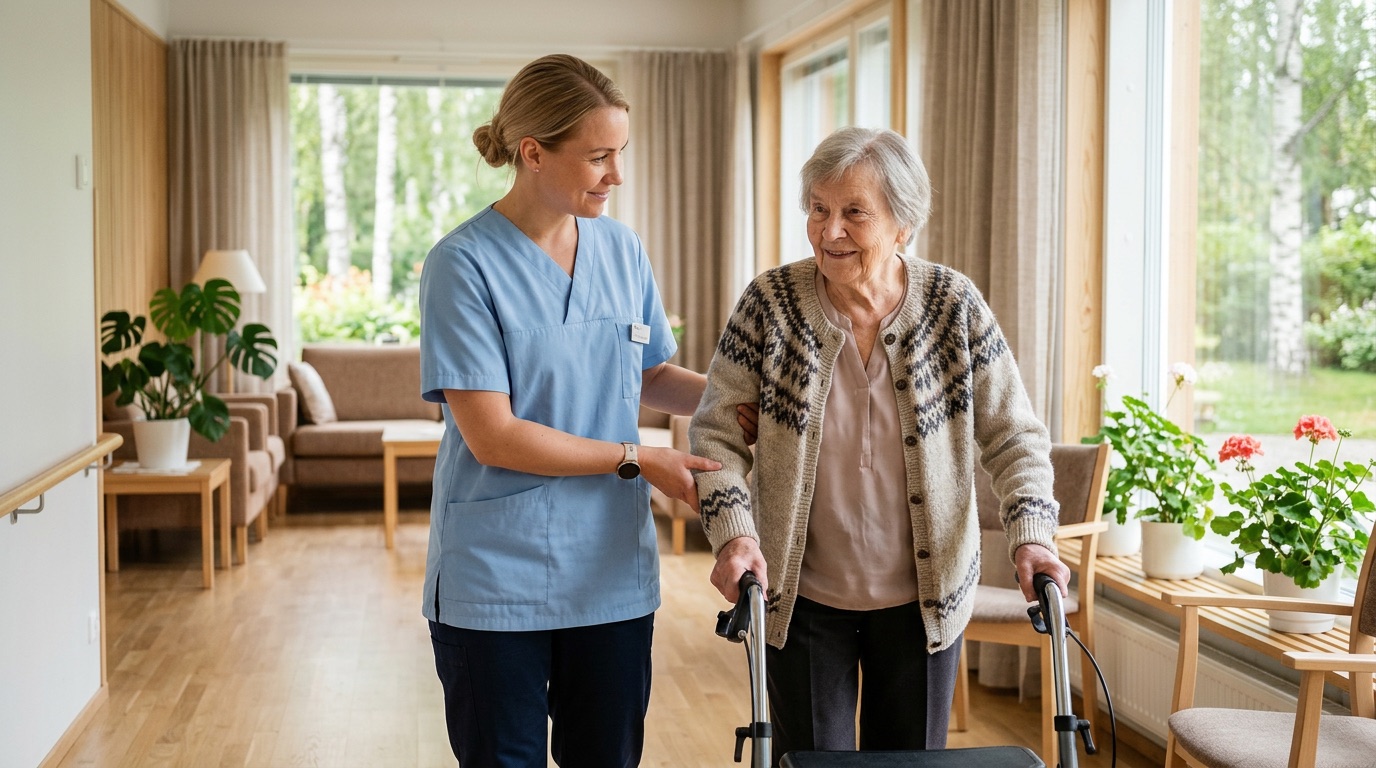
The three Finnishes of a nursing shift
One thing that surprises every foreign nurse: you're not learning one Finnish, you're learning three.
1. Patient Finnish (puhekieli, and often dialect)
Patients don't speak textbook Finnish. An 80-year-old from Savonia says mie instead of minä. A teenager says emmä tiiä instead of en minä tiedä. Patients in pain speak quietly, quickly, and colloquially. This is the Finnish that classroom courses prepare you for least, and it's the Finnish your work depends on most.
2. Colleague Finnish (fast, abbreviated, spoken)
Shift handover (raportti) is rapid-fire spoken Finnish full of abbreviations: RR for blood pressure, iv medications, unit-specific shorthand. Break room conversation is ordinary casual Finnish. Both move fast and don't wait for you.
3. Documentation Finnish (kirjakieli)
Patient records are written in formal, precise written Finnish. The good news: this is closest to what textbooks teach. The structure is standardised and once you learn the formulas, potilas valittaa kipua (the patient complains of pain), lääke annettu klo 14 (medication given at 14:00), documentation becomes the most learnable part.
Core vocabulary every nurse needs
| Finnish | English |
|---|---|
| sairaala / osasto | hospital / ward |
| potilas | patient |
| kipu / kipulääke | pain / painkiller |
| verenpaine | blood pressure |
| verensokeri | blood sugar |
| kuume | fever |
| lääke / lääkitys | medicine / medication |
| haava / side | wound / bandage |
| näyte / verikoe | sample / blood test |
| vuoro / raportti | shift / handover report |
Phrases for talking with patients
- Miltä teistä tuntuu tänään?, How are you feeling today?
- Onko teillä kipuja?, Are you in pain?
- Missä kipu tuntuu?, Where does it hurt?
- Otan teiltä verenpaineen., I'll take your blood pressure.
- Tässä on lääkkeenne., Here is your medication.
- Tarvitsetteko apua?, Do you need help?
- Lääkäri tulee pian., The doctor will come soon.
- Yrittäkää levätä., Try to rest.
Notice the formal te forms, with elderly patients, the polite plural is still standard in Finnish healthcare, even though everyday Finnish has largely dropped it.
A realistic study plan
Most foreign nurses study alongside work or family obligations, so honesty about timelines matters. From zero, reaching a solid B1 typically takes 12–24 months of consistent study, faster with intensive integration training (kotoutumiskoulutus, check te-palvelut.fi for eligibility), slower with self-study alone.
What makes the difference for healthcare workers specifically:
- Learn general Finnish and nursing Finnish in parallel. Don't wait until B1 to start medical vocabulary, you need both tracks from early on.
- Prioritise listening. Understanding patients and handovers is the hardest skill and the one exams and daily work both test hardest.
- Practise realistic dialogues, not word lists. "Greeting a patient" as a full conversation sticks far better than fifty isolated nouns.
- Test yourself under exam conditions. Timed practice reveals the gap between recognising a word and producing it under pressure.
How SuomiSpeak fits in
SuomiSpeak's Finnish for Work update was built around exactly this problem. The Nurse course contains 50 profession-specific lessons, from greeting patients through parts of the body, symptoms, medications, and equipment, plus workplace dialogues and full-length practice exams (40 questions, 45 minutes) with a readiness score that tells you honestly whether you'd pass today. And because the app also teaches puhekieli, the spoken Finnish your patients actually use, you're not blindsided the first time a patient says emmä jaksa instead of en minä jaksa.
Frequently asked questions
What Finnish level do nurses need in Finland?
The commonly accepted licensing benchmark for nurses trained outside the EU/EEA is YKI level 3, which corresponds to CEFR B1. In practice, employers, especially hospitals, often prefer B2. Always verify current requirements with Lupa- ja valvontavirasto (formerly Valvira) at lvv.fi.
Can I work as a nurse in Finland with English only?
For licensed nursing positions, practically no. Patient safety, documentation and the licensing process itself require Finnish (or Swedish). Some care assistant roles are more flexible, but Finnish skills determine how far you can go.
How long does it take to reach B1 Finnish from zero?
Typically 12–24 months of consistent study. Full-time integration training (kotoutumiskoulutus) is faster; self-study alongside shift work is slower. Starting profession-specific vocabulary early, in parallel with general Finnish, shortens the total path.
What is the hardest part of hospital Finnish?
Understanding patients. They speak colloquial Finnish (puhekieli) and often dialect, quickly and quietly. Textbook courses prepare you least for this, which is why listening practice with real spoken Finnish matters more than any vocabulary list.
Get exam-ready nursing Finnish
50 nurse-specific lessons, patient dialogues, and realistic practice exams with a readiness score, alongside the full A1–C1 Finnish course. Free to start.