Finnish for Security Guards: The Training, the Vocabulary, and Staying Calm in Two Languages
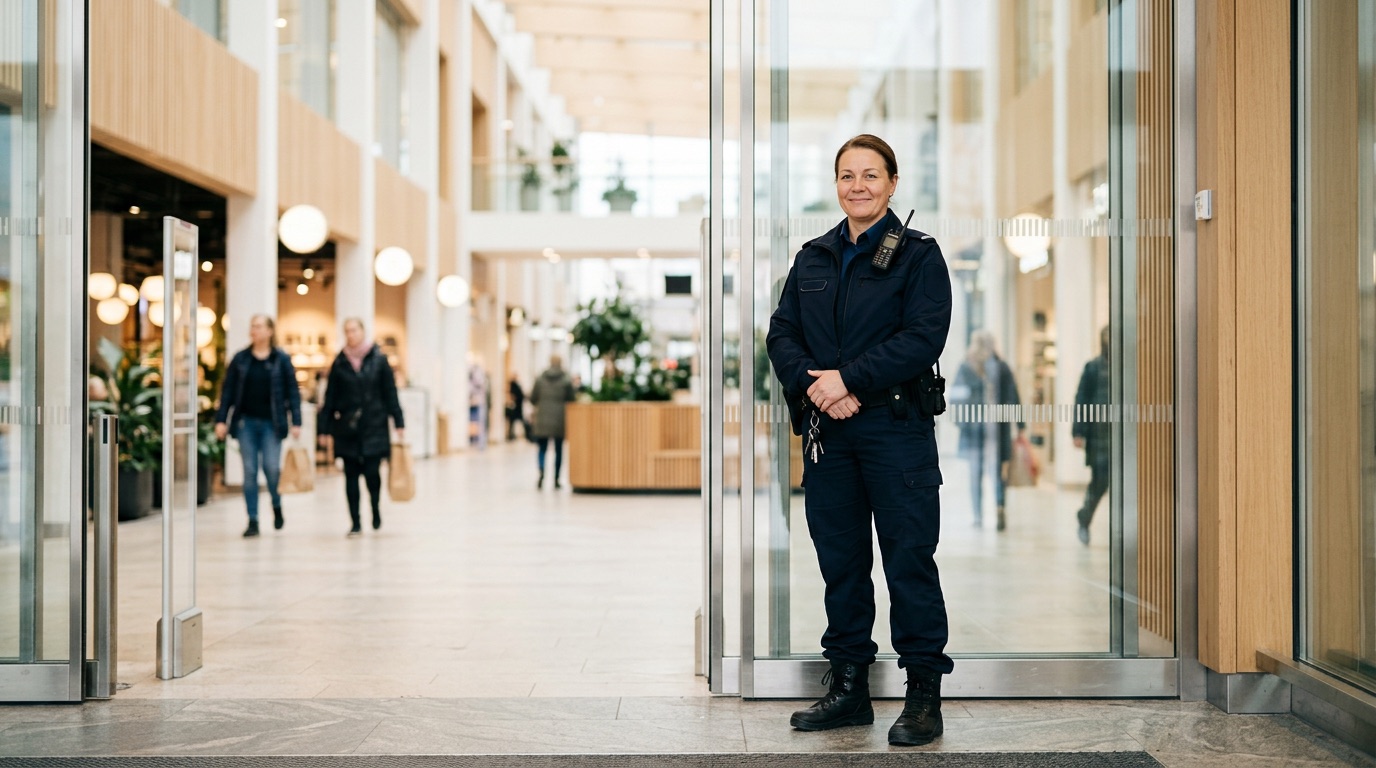
Security work is a steady, in-demand profession across Finland, shopping centres, transport hubs, events, office buildings, hospitals. It's also a popular field for immigrants, because the entry path is short and clear: complete the approved guard training, get your guard card (vartijakortti), start working.
There's one catch that surprises many applicants: the training and its exams are conducted in Finnish (or Swedish). And unlike some professions where language needs are informal, a security guard's job is language, instructing, calming, warning, and reporting. This guide covers the Finnish you need at each step.
The path: vartija training in Finnish
To work as a security guard (vartija) you complete approved training, starting with the temporary guard course and continuing to the full qualification, and apply for your guard card from the police. Event stewards and door staff (järjestyksenvalvoja) have their own course. The details and current hour requirements are on poliisi.fi.
The training covers law (powers and their limits), emergency procedures, first aid, and practical situations, taught and examined in Finnish. The legal terminology is the hard part: words like toimivaltuudet (powers/authority), kiinniotto (apprehension), hätävarjelu (self-defence) and poistaminen (removal) have precise legal meanings you need to understand, not just recognise. A B1 reading level makes the course manageable; below that, you're translating your way through a law lecture.
The vocabulary of the job
| Finnish | English |
|---|---|
| vartija | security guard |
| järjestyksenvalvoja | steward / order supervisor |
| vartioimisalue | guarded area (statutory term) |
| kulunvalvonta | access control |
| kameravalvonta | camera surveillance |
| hälytys / hälytysjärjestelmä | alarm / alarm system |
| kierros | patrol round |
| raportti / ilmoitus | report / notification |
| hätäuloskäynti | emergency exit |
| ensiapu | first aid |
| näpistys / varkaus | petty theft / theft |
| järjestyshäiriö | public disturbance |
The phrases: calm, clear, repeatable
Security Finnish has a particular character: it needs to be short, unambiguous, and deliverable in a calm voice. These are the workhorse phrases.
Everyday customer contact
- Hyvää päivää, voinko auttaa?, Good day, can I help you?
- Etsittekö jotain tiettyä?, Are you looking for something specific?
- WC löytyy toisesta kerroksesta., The toilets are on the second floor.
- Kauppakeskus sulkeutuu kymmenen minuutin kuluttua., The shopping centre closes in ten minutes.
Most of a guard's shift is this, being the person people ask for directions. Friendly service Finnish is genuinely half the job.
Instructions and requests
- Voisitteko näyttää laukkunne?, Could you show your bag?
- Tänne ei valitettavasti voi tulla tämän tavaran kanssa., Unfortunately you can't enter with this item.
- Pyydän teitä poistumaan., I'm asking you to leave.
- Tupakointi on kielletty tällä alueella., Smoking is forbidden in this area.
- Odottakaa tässä, kiitos., Please wait here.
De-escalation
- Rauhoittukaa, selvitetään tämä yhdessä., Calm down, let's sort this out together.
- Ymmärrän, että tilanne on ikävä., I understand this situation is unpleasant.
- Ei tässä ole mitään hätää., There's nothing to worry about here.
- Kerrotteko omin sanoin, mitä tapahtui?, Can you tell me in your own words what happened?
De-escalation is where language skill becomes safety. A guard who can lower the temperature with words rarely needs anything else. This is also where understanding puhekieli matters most, an agitated person doesn't speak textbook Finnish, and you need to catch what they're actually saying, fast.
Emergencies
- Onko kaikki hyvin? Kuuletteko minua?, Is everything okay? Can you hear me?
- Soitan ambulanssin., I'm calling an ambulance.
- Poistukaa rauhallisesti lähimmästä uloskäynnistä., Exit calmly through the nearest exit.
- Tilanne on ohi, kiitos kärsivällisyydestä., The situation is over, thank you for your patience.
Report writing, the skill nobody mentions
Every incident ends with a written report, and reports are written in clear formal Finnish: what happened, when, who was involved, what actions you took. The formulas are learnable, Havaitsin klo 21.15 häiriötilanteen pääsisäänkäynnillä (At 21:15 I observed a disturbance at the main entrance), but they require exactly the kirjakieli that spoken practice alone doesn't build. Plan for both.
How to prepare efficiently
- Build general Finnish to A2–B1 first, the guard course assumes you can follow teaching in Finnish.
- Learn the legal/professional vocabulary deliberately, it won't come from everyday conversation.
- Train listening under stress, real situations are noisy, fast and colloquial.
- Practise the calm phrases aloud until they're automatic, in a tense moment you fall back on what's drilled, not what's known.
SuomiSpeak's Finnish for Work update includes a dedicated Security Guard course, 50 lessons covering exactly this vocabulary, with dialogues for customer service, de-escalation and emergencies, plus timed practice exams that build the formal reading skill the training demands, and a readiness score so you know when you're prepared.
Frequently asked questions
Is the security guard training in Finland available in English?
The approved vartija training and its exams are conducted in Finnish (or Swedish). This surprises many applicants, plan to reach roughly B1 reading level before enrolling, or the legal terminology becomes a wall. Check current details at poliisi.fi.
What Finnish level do I need to work as a security guard?
Around B1. The training demands formal reading comprehension of legal terms, and the job itself demands calm spoken Finnish for instructions, de-escalation and incident reports.
What language skills matter most in guard work?
Three registers: friendly service Finnish for directions and questions, firm clear command phrases, and formal written Finnish for incident reports. De-escalation, calming people with words, is the highest-value skill and the best protection you have.
Get ready for the vartija course, in Finnish
A 50-lesson Security Guard course with real workplace dialogues, exam practice, and a readiness score. Free to start.